Arcachon and Le Moulleau out of season
Out of season, Arcachon gets its calm back and the bay shows another side. Here is what stays open, what the weather is really like, and our ideas for days out from autumn to spring.
Updated 17 October 2026
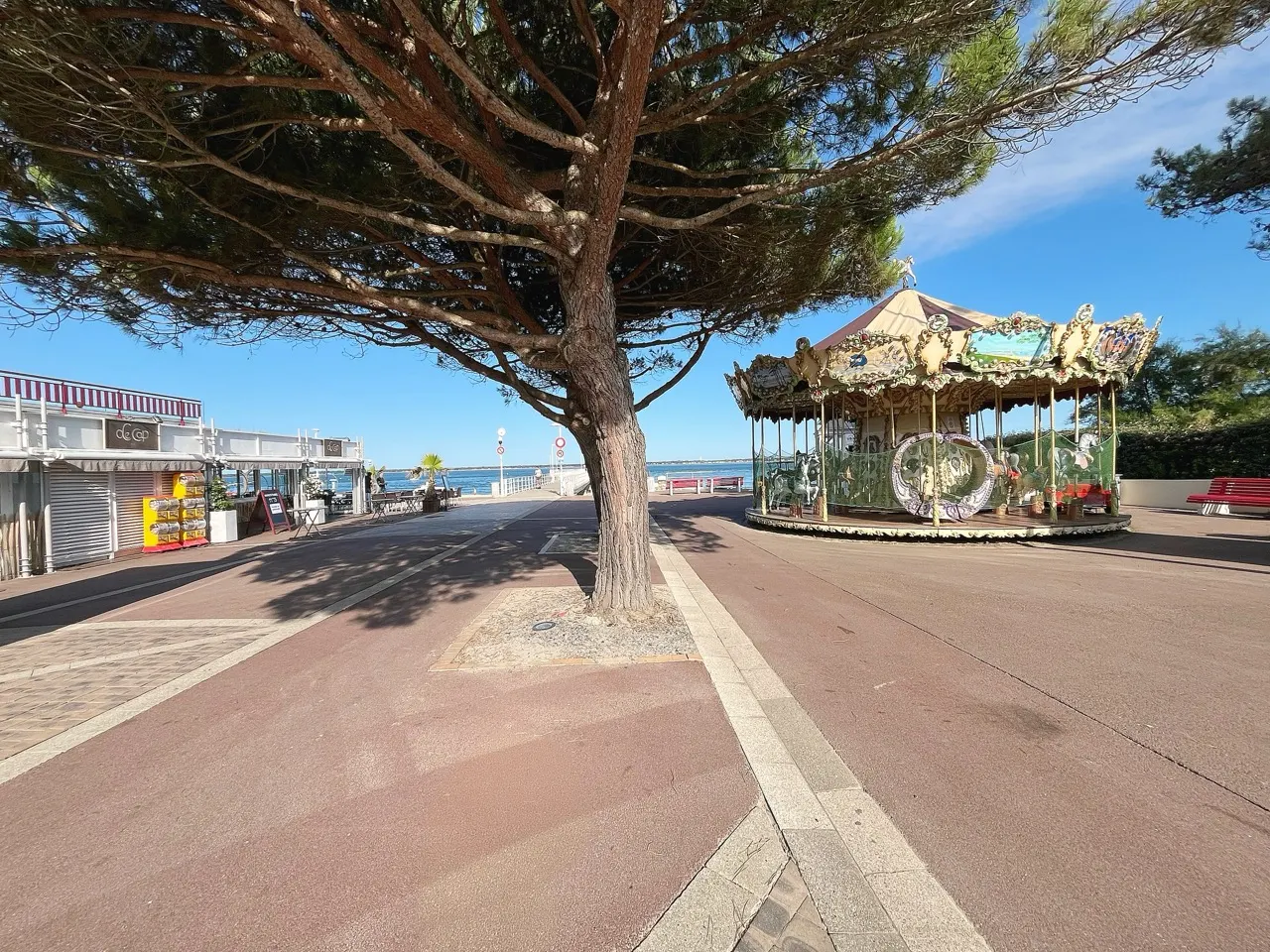
Arcachon’s best-known quarter is called the Ville d’Hiver, the “Winter Town”. In the 19th century, people came here to treat respiratory illnesses such as tuberculosis, sheltered by the pines. Today the market, the shuttle to Cap Ferret, the dune and the walks are still there when the summer crowds have gone home. Here are our ideas for days out, and an honest look at the weather.
The weather, honestly
The bay’s climate is mild, but winter is wet and windy. Here is what Météo-France’s 1991–2020 averages say for the Cazaux weather station, in the neighbouring commune of La Teste-de-Buch:
- In autumn, September still feels almost like summer, with average highs around 24 °C, and October is around 20 °C. November is the wettest month of the year.
- In winter, from December to February, afternoons top out at around 11 to 12 °C and nights are chilly, with the odd frosty morning. It rains on about thirteen days a month in December and January, and strong winds are more frequent than in summer.
- In spring, average highs climb from about 16 °C in March to 21 °C in May, and May gets more than twice as much sunshine as January.
Pack a rain jacket and a windproof layer, and save the sunny days for the dune and the bike.
What stays open, and what closes
All year round, the Union des Bateliers Arcachonnais shuttle links the Thiers jetty with Cap Ferret on a winter timetable, and the Île aux Oiseaux boat tour runs on some dates. The Dune du Pilat, Arcachon market and the Réserve ornithologique du Teich all stay open.
Other things only run in season. The shuttles from Le Moulleau jetty, to Cap Ferret and the Banc d’Arguin, run from mid-June to the end of September, the little train at Cap Ferret runs in summer, and the staircase up the dune is taken down after the All Saints’ school holidays. Some oyster huts cut their opening days or switch to takeaway only: check before you go. Our guide to exploring the bay by boat covers the crossings.
The Ville d’Hiver and the Sainte-Cécile observatory
On the heights above the town centre, the Ville d’Hiver has around 300 19th-century villas, from Swiss chalets to Gothic manors and Moorish pavilions, along streets that wind among the pines. Start, for example, at Villa Teresa, then walk past the Toledo, Alexandre Dumas and Brémontier villas.
From the centre, a free lift at the end of rue du Maréchal-de-Lattre-de-Tassigny takes you up to the Parc Mauresque, a 4-hectare garden. Close by, the Sainte-Cécile observatory, a 25 m iron tower, is reached by a footbridge over a ravine. You can climb it for free all year for a view over the town and the bay.
The tourist office runs guided walks through the Ville d’Hiver, including in autumn, and has a self-guided trail to do on your own. All year round it also runs tours of the Abatilles spring, the source of Arcachon’s mineral water, discovered in 1923 in the quarter next to Le Moulleau.
The Dune du Pilat without the crowds
Out of season you get the dune without the summer crush. It is free to visit all year; only the car park charges, at off-season rates. From the end of the All Saints’ holidays to the spring holidays, the staircase is taken down so it doesn’t get buried in sand: you climb straight up the slope, and walking shoes are recommended. Our guide to getting to the Dune du Pilat covers the bike ride from Le Moulleau.
Oysters, ports and the market
Gujan-Mestras, east of Arcachon, has seven oyster ports: La Hume, Meyran, Gujan, Larros, Le Canal, La Barbotière and La Mole. A coastal path of about 8 km links them, on foot or by bike. At the port of Larros, the Maison de l’Huître explains how oysters are farmed and what the oyster farmer’s job involves; check its opening hours before you go.
In Arcachon, the market sets up on Place des Marquises, under a covered hall and outside. Out of season it runs in the mornings from Tuesday to Sunday; from 15 June to 15 September it opens every day.
Cycling in mild weather
The land is almost flat, and the mild days of autumn and spring are ideal for cycling. From Le Moulleau, the cycle path runs south to Pyla and the dune, and north to central Arcachon.
For something bigger, the loop around the bay is 79 km, about 80% of it on cycle paths, and passes through La Teste-de-Buch, Gujan-Mestras and the Réserve ornithologique du Teich. You don’t have to do it all: six railway stations line the route, from Arcachon to Biganos by way of Gujan-Mestras and Le Teich, and the train brings you back.
The birds of Le Teich
At the far end of the bay, the Réserve ornithologique du Teich, formerly called the Parc ornithologique, covers 110 hectares of marsh, mudflats and lagoons. A 6 km loop path links its 20 hides: allow three to four hours, or take the shorter loop of about 2 km with young children. It is open every day except 25 December.
Winter is an excellent time to go. From October to March, wintering birds gather here in large flocks, and brent geese winter on the bay in their tens of thousands. In spring it is nesting time: nesting peaks from April to June, and you can watch young birds up close from the hides. Aim for high tide, when shorebirds leave the mudflats for the reserve’s lagoons; the reserve publishes a calendar of the best viewing times every year.
Dates in the calendar
- The third weekend of September: European Heritage Days, with free visits to places that are often closed the rest of the year.
- Late September or early October: Cadences, Arcachon’s dance festival, at the Théâtre Olympia.
- During the Christmas school holidays: the Christmas market on Place des Marquises.
- Early May: La Plage aux Écrivains, a book festival founded in 2005 that brings around thirty authors to the seafront.
Dates change from year to year: check them with the Arcachon tourist office.
Staying in Le Moulleau out of season
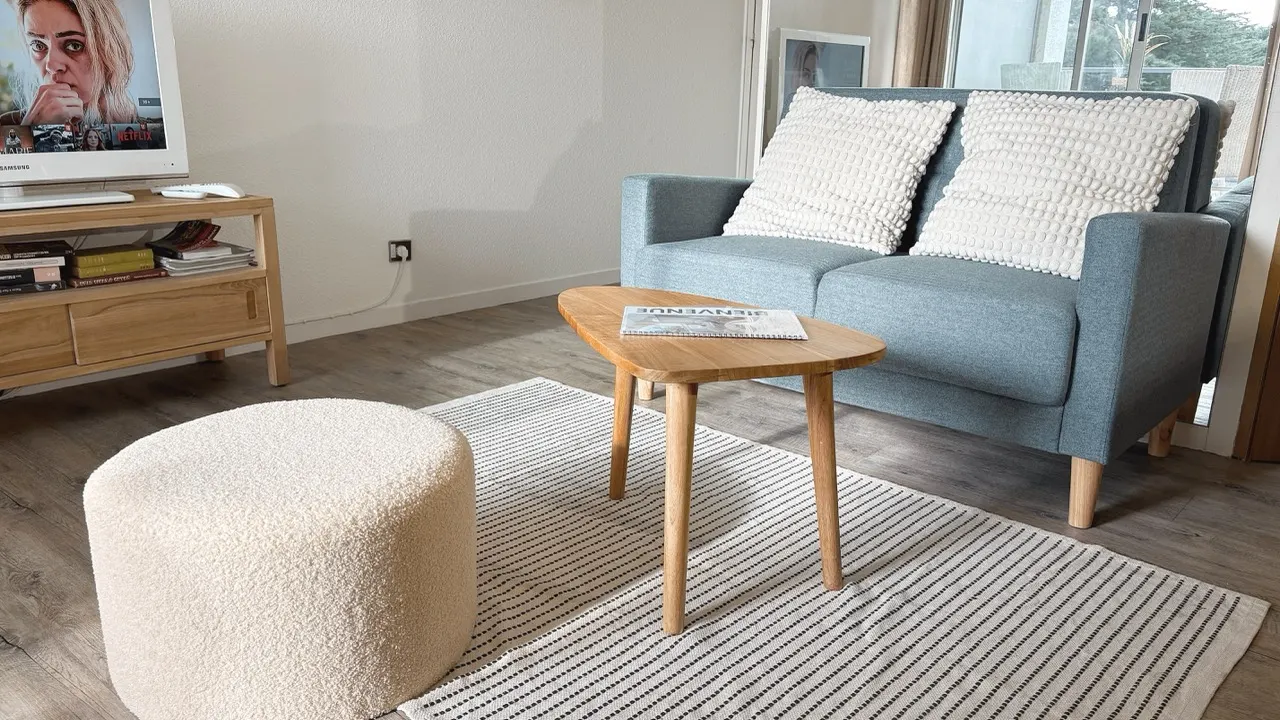
Out of season, Le Moulleau beach, facing the Dune du Pilat, is lovely for long walks: at low tide the water goes out a long way and uncovers large sandbanks. Cœur Moulleau, our flat 50 m from the beach, has air conditioning and heating, a sunny terrace and two bikes, so you can make the most of the fine days and come back to a warm flat in the evening. To compare neighbourhoods, see our guide on where to stay in Arcachon.
Frequently asked questions
What is there to do in Arcachon in winter?
Walk through the Ville d’Hiver and climb the Sainte-Cécile observatory, free all year round, climb the Dune du Pilat, free to visit all year, follow the seven oyster ports of Gujan-Mestras, watch wintering birds at the Réserve ornithologique du Teich, open every day except 25 December, and cross to Cap Ferret on the shuttle that leaves the Thiers jetty all year.
What is the weather like in Arcachon out of season?
Mild but wet. According to Météo-France averages for Cazaux, in the neighbouring commune of La Teste-de-Buch, average highs are about 24 °C in September, 20 °C in October, 11 to 12 °C from December to February and 21 °C in May. November is the wettest month of the year.
Is Arcachon market open all year?
Yes. The market on Place des Marquises, under its covered hall and outside, runs in the mornings from Tuesday to Sunday out of season. From 15 June to 15 September it opens every day.